2026 Estate Tax Changes: What Connecticut Families Need to Know Now


The Federal Exemption Just Got Locked In — But Connecticut Families Still Face Unique Challenges
If you've been following estate tax news, you may have heard that the federal estate tax exemption was set to drop dramatically in 2026. Many families spent 2024 and early 2025 worried about a potential "sunset cliff" that would have cut the exemption nearly in half.
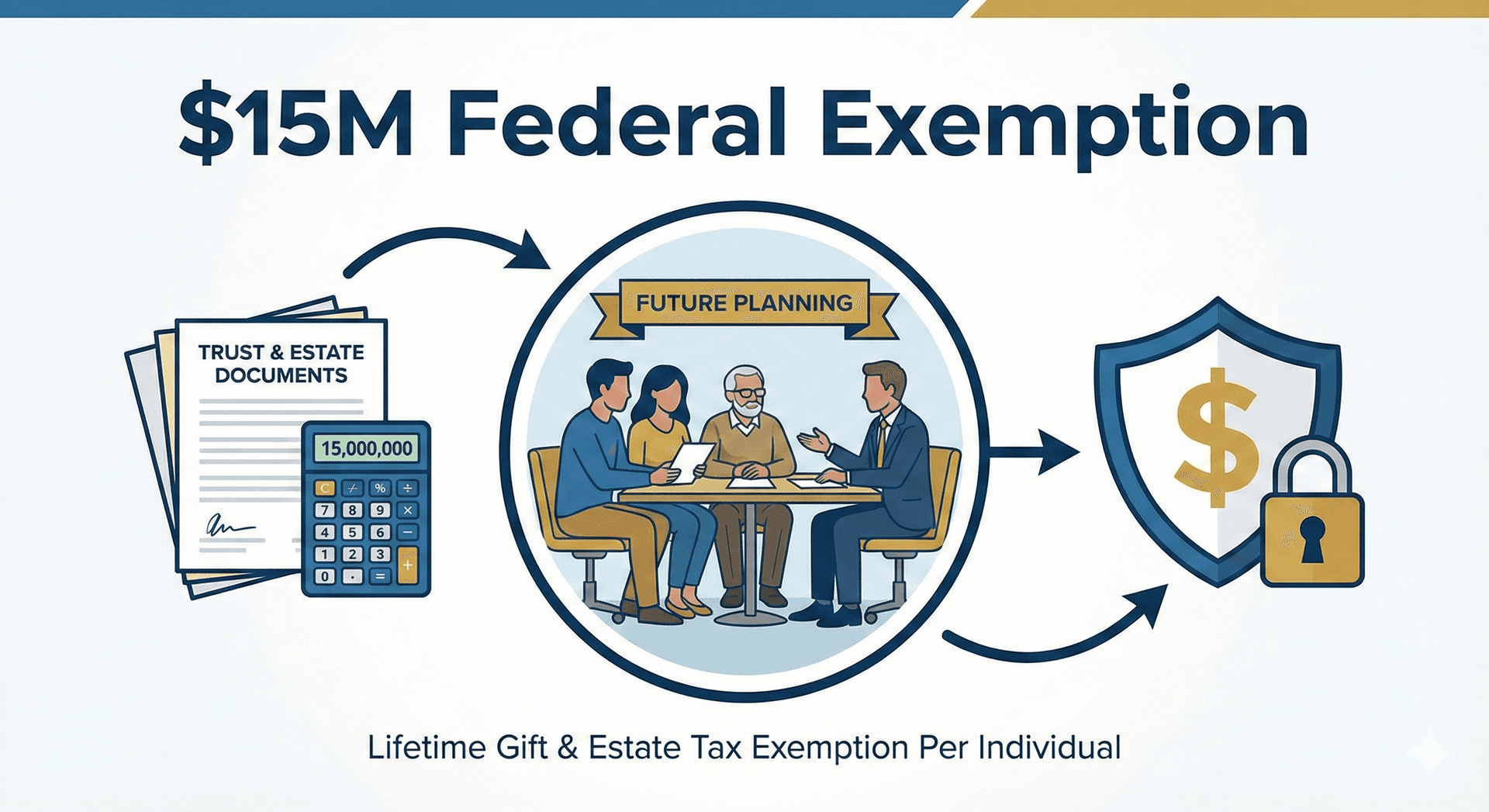
That uncertainty is now resolved. The One Big Beautiful Bill Act, signed into law on July 4, 2025, permanently increased the federal estate and gift tax exemption to $15 million per individual — or $30 million for married couples — effective January 1, 2026. The exemption will continue to be indexed for inflation going forward.
For many families, this is welcome news. It means fewer estates will face federal estate taxes.
But here's what Connecticut families need to understand: federal law is only part of the picture.
Connecticut's Estate Tax: The Portability Problem
Connecticut has aligned its estate tax exemption with the federal exemption, which means the Connecticut exemption is also now $15 million per person. That sounds straightforward — but there's a critical difference.
Connecticut does not allow portability between spouses.
Under federal law, if one spouse dies and doesn't use their full exemption, the surviving spouse can "port" (or carry over) that unused exemption. This effectively gives a married couple flexibility in how they structure their estate plan.
Connecticut doesn't offer this. If one spouse dies without fully utilizing their Connecticut exemption, that unused amount is lost forever. It cannot transfer to the surviving spouse.
This matters more than many families realize. Without proper planning, a married couple could end up paying Connecticut estate tax that could have been avoided with the right trust structures in place.
Why Estate Planning Still Matters — Even With Higher Exemptions
Some families hear "$15 million exemption" and assume estate planning no longer applies to them. This is a mistake for several reasons.
First, exemptions can change. While the current law makes the $15 million exemption permanent, future legislation could always modify it. Families who build flexible estate plans now are better positioned regardless of what happens in Washington.
Second, estate planning is about far more than taxes. A comprehensive estate plan addresses:
- Who makes decisions if you become incapacitated — through powers of attorney and health care directives
- Who inherits your assets and when — particularly important if you have minor children, blended families, or beneficiaries who may not be ready to manage an inheritance
- How to avoid probate delays — Connecticut probate can take months or longer, and certain assets may be subject to court oversight unless properly titled or held in trust
- Digital asset access — Connecticut has adopted the Revised Uniform Fiduciary Access to Digital Assets Act (RUFADAA), which allows fiduciaries to manage digital property, but only if you've granted that authority in your estate planning documents
Third, Connecticut's 12% estate tax rate on amounts above the exemption — combined with the federal 40% rate — can result in a combined effective rate approaching 47% for very large estates. For families approaching or exceeding the exemption threshold, strategic planning through vehicles like Spousal Lifetime Access Trusts (SLATs), Irrevocable Life Insurance Trusts (ILITs), or Credit Shelter Trusts can preserve significant wealth for future generations.

The 2026 Planning Checklist for Connecticut Families
Whether your estate is well below the exemption or approaching it, this is a good time to review your plan. Here's what to consider:
Review beneficiary designations. Retirement accounts, life insurance policies, and payable-on-death accounts pass outside your will. If you haven't updated these in years, they may not reflect your current wishes — or could even still name an ex-spouse.
Update powers of attorney and health care directives. Connecticut law has specific requirements for these documents. If yours were drafted in another state or many years ago, they may not work as intended when you need them most.
Consider trust planning for married couples. Because Connecticut doesn't allow portability, married couples with significant assets should explore whether trust structures can help both spouses fully utilize their exemptions.
Document your digital assets. Make a list of online accounts, cryptocurrency holdings, cloud storage, and subscription services. Authorize your fiduciary to access these accounts in your estate planning documents.
Have the conversation with your family. One of the most overlooked aspects of estate planning is simply communicating your intentions. Families who understand the plan in advance experience fewer conflicts and smoother administration.
Working With an Attorney Who Uses Sophisticated Planning Tools
Estate planning documents are not one-size-fits-all. Generic templates pulled from the internet often fail to account for Connecticut-specific requirements or miss opportunities for tax-efficient planning.
As a member of WealthCounsel — a national network of estate planning attorneys — I use attorney-drafted documents that are regularly updated to reflect changes in federal and state law. This ensures that your plan is built on a solid legal foundation and tailored to your family's specific needs.

The Bottom Line
The 2026 estate tax changes bring welcome certainty for many families, but they don't eliminate the need for thoughtful planning — especially in Connecticut, where the lack of portability creates unique challenges.
If you haven't reviewed your estate plan recently, or if you've experienced major life changes — a marriage, divorce, birth of a child or grandchild, relocation to Connecticut, or significant changes in your financial situation — now is an excellent time to take a fresh look.
An experienced estate planning attorney can help you understand how Connecticut law applies to your situation and build a plan that protects your family and preserves your legacy.